Characteristics and Evolution of Information Technology
Information technology combines computing, telecommunications and media to process and exchange information, while its growth also raises concerns about unequal access and surveillance.
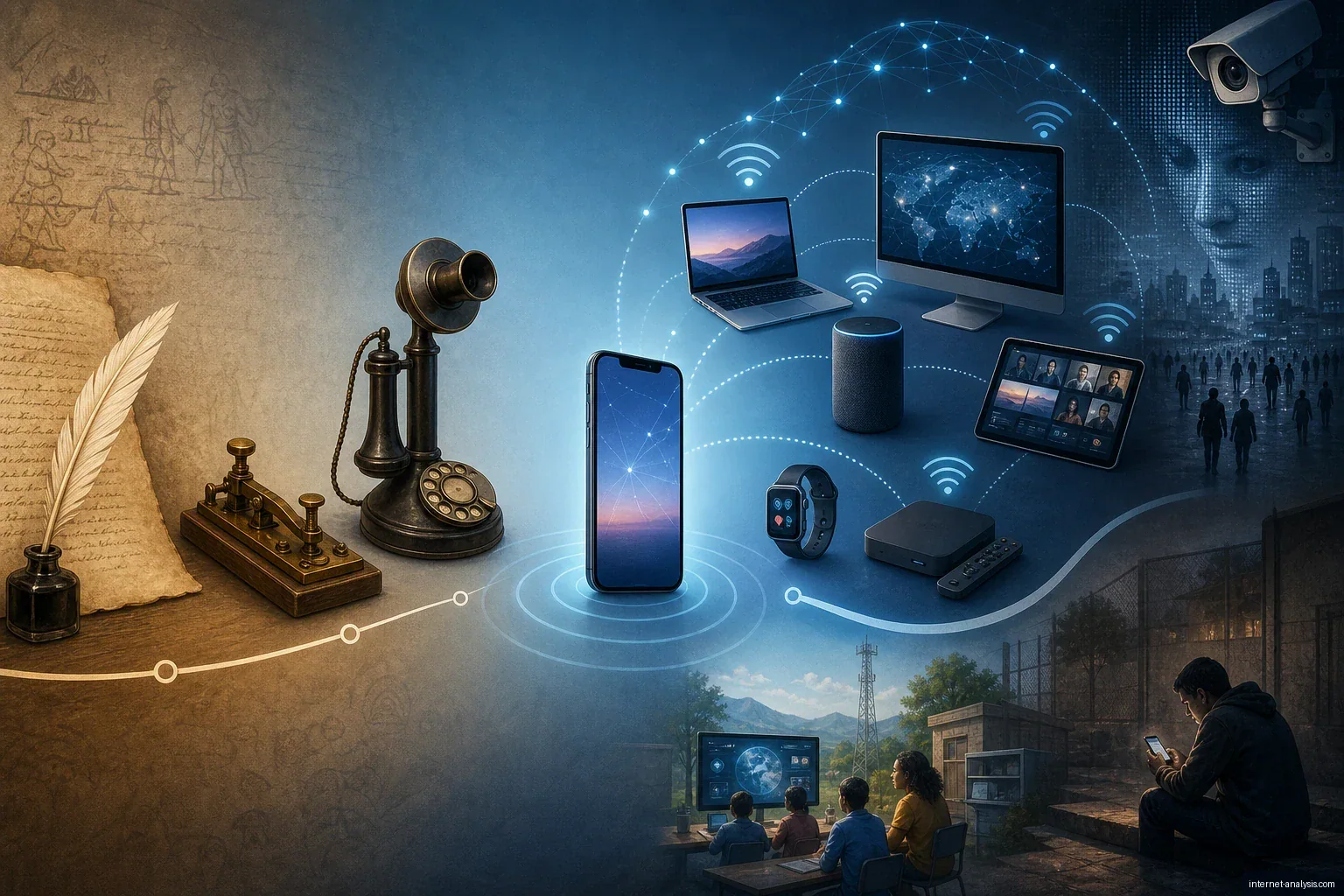
Information technology is often associated with computers, software and digital networks, but the term has a broader scope. Telephones, television systems and computers all belong to a long technological tradition centered on creating, processing, storing and exchanging information.
From writing to electronic communication
The development of writing made it possible to preserve knowledge and communicate beyond the limits of memory and spoken conversation. Much later, the telegraph accelerated long-distance messaging, while the telephone enabled people to communicate by voice across large distances.
Television expanded electronic communication by distributing sound and moving images to mass audiences. Computer networks and internet service then introduced interactive, global access to information, allowing people not only to receive content but also to create, process and share it.
Convergence is a defining characteristic
One of the most important characteristics of modern IT is convergence: functions that once required separate systems now operate together. Computing and telecommunications became increasingly integrated during the final decade of the 20th century. At the same time, smaller electronic components helped make multifunctional devices more affordable and practical.
Mobile phones illustrate this shift. In addition to voice calls, they can provide internet and television content, capture photographs and video, and exchange text, speech and images over wireless networks. When combined with GPS capabilities, mobile systems can also connect digital information with geographic location.
Core features of IT
- Information processing: Computers and software can organize, transform and analyze data.
- Rapid communication: Telecommunications networks move text, audio, images and video across local and global distances.
- Digital integration: A single device can perform tasks previously handled by telephones, televisions, cameras and computers.
- Mobility: Wireless connections make information and communication services available away from fixed locations.
- Miniaturization: Smaller components support compact, affordable devices with multiple capabilities.
- Expanding availability: IT occupies a growing role in everyday communication, work and access to information.
Unequal access and social risks
The use of IT continues to expand, particularly in wealthier countries. However, uneven access to devices, networks and digital skills can deepen existing social inequalities. This digital divide may separate affluent and disadvantaged communities, connected and unconnected regions, and generations with different levels of technological experience.
The increasing reach of connected technologies also creates concerns about personal freedom and surveillance. Sometimes described as the Big Brother effect, this fear reflects the possibility that organizations or authorities could use information systems to monitor individuals and their activities.
IT’s growing place in society
Information technology is not a single device or invention. It is an evolving combination of computing, telecommunications and media technologies that enables information to be created, transmitted and used in many forms. Its development has brought greater connectivity and increasingly versatile devices, while also raising persistent questions about inclusion, generational differences, privacy and individual freedom.

Tomasz
Founder & Network Data Analyst at Internet AnalysisTomasz leads data-focused analysis at Internet Analysis, covering internet speed, latency, reliability, broadband infrastructure, and ISP performance. His work connects measurable network indicators with clear explanations for everyday users.
View author profile →How this article was prepared
Reviews measurement definitions, compares like-for-like network samples, checks geographic and time coverage, and documents limitations before drawing conclusions.
Read our methodology →Reviewed by the Internet Analysis Editorial Team
Reviewed by the Internet Analysis Editorial Team · Updated August 19, 2026
Meet the editorial team →Article context, review and related questions
Information technology combines computing, telecommunications and media to process and exchange information, while its growth also raises concerns about unequal access and surveillance.
| Measure | Value | Context |
|---|---|---|
| Article type | Information Technology | Editorial classification |
| Reading time | 3 minutes | Estimated at approximately 220 words per minute |
| Editorial review | Internet Analysis Editorial Team | Updated August 19, 2026 |
| Review date | August 19, 2026 | Latest stored article update |
Methodology
Reviews measurement definitions, compares like-for-like network samples, checks geographic and time coverage, and documents limitations before drawing conclusions.
Full methodology →Data freshness
- Page updated
- Data period
- August 19, 2026
- Responsible editor
- TomaszFounder & Network Data Analyst
Primary sources
- Internet Analysis editorial methodologyReview and limitation rules
Limitations
- The article is informational and may simplify technical details for readability.
- Products, standards, prices and service availability can change after the review date.
- The latest review date does not guarantee that every external product or service remains unchanged.
Related questions
What is the main point of “Characteristics and Evolution of Information Technology”?
Information technology combines computing, telecommunications and media to process and exchange information, while its growth also raises concerns about unequal access and surveillance.
How was this article prepared?
Reviews measurement definitions, compares like-for-like network samples, checks geographic and time coverage, and documents limitations before drawing conclusions.
When was this information last reviewed?
The latest stored review or update date is August 19, 2026.