How Mobile Modems Moved From PCMCIA Cards to USB Dongles
Mobile modems evolved from heat-prone PCMCIA cards into compact USB dongles with integrated antennas and self-installing connection software.
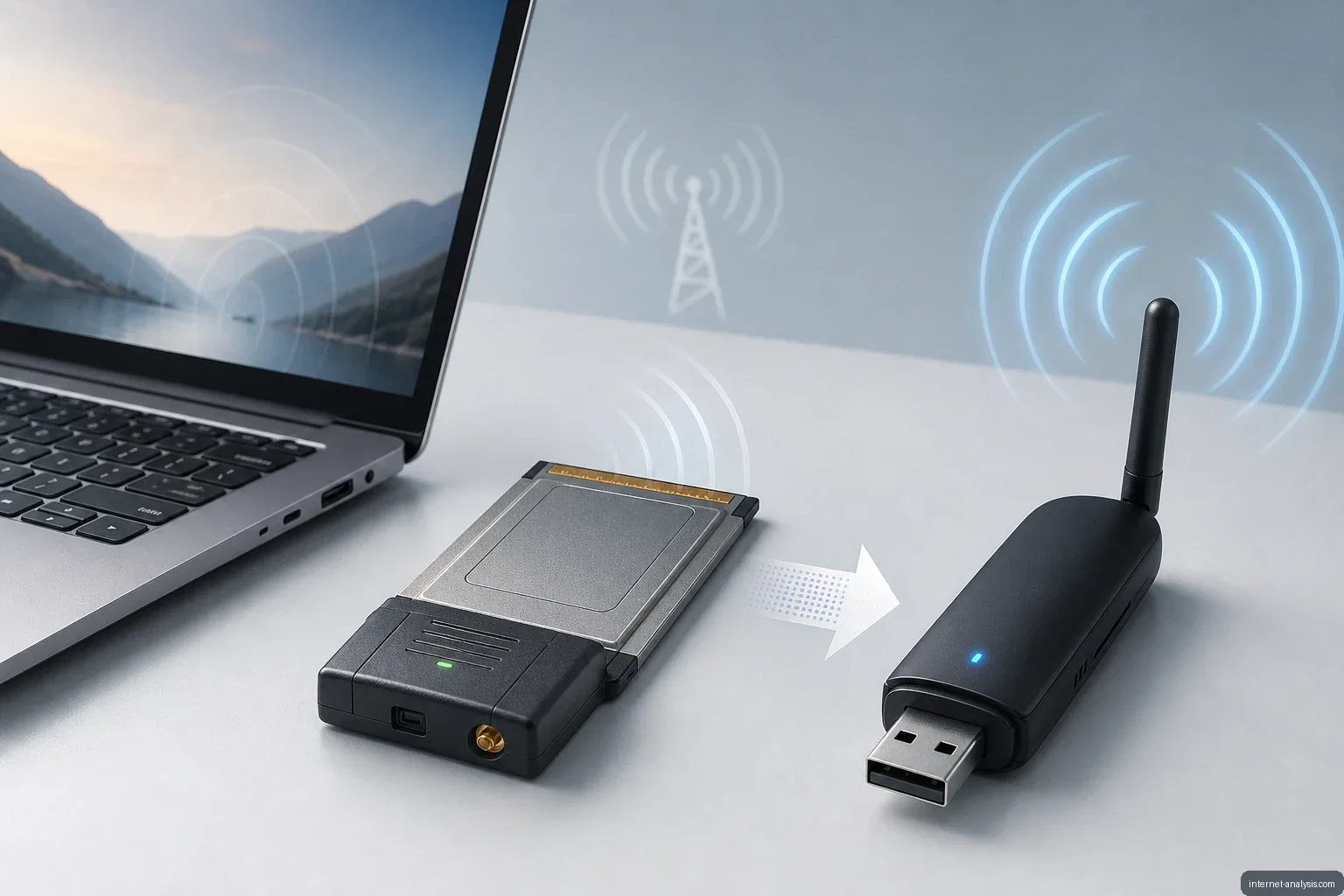
Mobile modems emerged as carriers sought to turn growing demand for internet access into a broader hardware business. Alongside mobile data plans and internet-ready smartphones, carriers began offering laptops and dedicated wireless modems that allowed subscribers to connect computers to cellular networks.
Why carriers entered the modem market
Only a limited number of laptop manufacturers initially equipped their computers with integrated cellular modems. That left a significant gap between conventional laptops and mobile networks—and gave carriers an opportunity to supply the missing hardware themselves.
Bundling a modem with mobile internet service also allowed carriers to provide subscribers with a more complete package: network access, compatible equipment and the software required to establish a connection.
The PCMCIA card era
Many early mobile modems were PCMCIA cards designed for the expansion slots found on laptops of the period. These devices could maintain a relatively strong cellular signal, but they were not always dependable during extended use. Heat buildup was a particular weakness, affecting the stability of long-running connections.
The shift to USB modems
USB dongles became a more practical successor. Their integrated antennas received the carrier’s signal, while the USB interface made them compatible with a wider range of computers without requiring a dedicated PCMCIA slot.
The move to USB also simplified setup. Manufacturers could preload drivers and connection software on the modem itself, allowing installation to begin automatically when the device was connected for the first time. This reduced the need for separate installation media and made mobile internet access easier to deploy.
A more accessible form of cellular connectivity
By combining an antenna, modem hardware and installation software in one compact device, USB mobile modems addressed several limitations of earlier card-based products. They helped carriers extend cellular internet service beyond smartphones and built-in laptop modems, giving users a straightforward way to bring mobile connectivity to otherwise conventional computers.

Anna
Digital Safety & Consumer Research Editor at Internet AnalysisAnna edits practical guidance about safer internet use, privacy, online services, and consumer decisions. She prioritizes clear recommendations, scope, and transparent sourcing.
View author profile →How this article was prepared
Reviews claims against named primary or authoritative sources, removes unsupported certainty, distinguishes general education from professional advice, and records the article update date.
Read our methodology →Reviewed by the Internet Analysis Editorial Team
Reviewed by the Internet Analysis Editorial Team · Updated August 20, 2026
Meet the editorial team →Article context, review and related questions
Mobile modems evolved from heat-prone PCMCIA cards into compact USB dongles with integrated antennas and self-installing connection software.
| Measure | Value | Context |
|---|---|---|
| Article type | Mobile Technology | Editorial classification |
| Reading time | 2 minutes | Estimated at approximately 220 words per minute |
| Editorial review | Internet Analysis Editorial Team | Updated August 20, 2026 |
| Review date | August 20, 2026 | Latest stored article update |
Methodology
Reviews claims against named primary or authoritative sources, removes unsupported certainty, distinguishes general education from professional advice, and records the article update date.
Full methodology →Data freshness
- Page updated
- Data period
- August 20, 2026
- Responsible editor
- AnnaDigital Safety & Consumer Research Editor
Primary sources
- Internet Analysis editorial methodologyReview and limitation rules
Limitations
- The article is informational and may simplify technical details for readability.
- Products, standards, prices and service availability can change after the review date.
- The latest review date does not guarantee that every external product or service remains unchanged.
Related questions
What is the main point of “How Mobile Modems Moved From PCMCIA Cards to USB Dongles”?
Mobile modems evolved from heat-prone PCMCIA cards into compact USB dongles with integrated antennas and self-installing connection software.
How was this article prepared?
Reviews claims against named primary or authoritative sources, removes unsupported certainty, distinguishes general education from professional advice, and records the article update date.
When was this information last reviewed?
The latest stored review or update date is August 20, 2026.