Hacking in TV Shows and Movies: Where Fiction Meets Reality
A look at how movies and television portray Wi-Fi attacks, printer compromises, mobile forensics, the darknet and hacker jargon—and why technical accuracy improves storytelling.
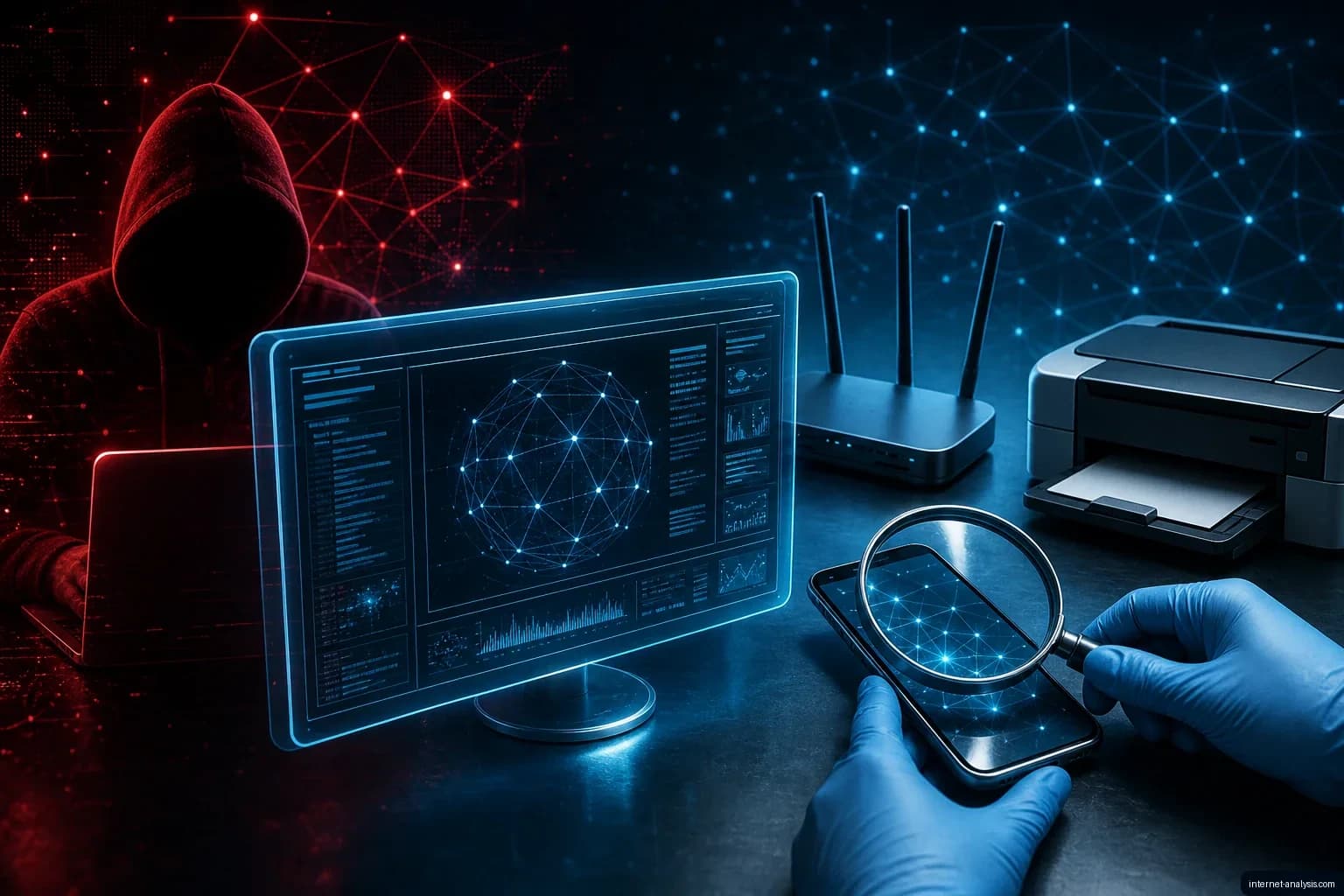
Can someone bypass a “triple firewall,” enter a police network through a printer buffer or restore deleted text messages from a phone? Movies and television often present such feats as fast, dramatic and nearly limitless. This episode of the Secure Podcast examines how those scenes compare with real-world cybersecurity.
How television depicts hacking
On-screen hacking has taken many forms, from elaborate cyberattacks to interfaces and techniques that bear little resemblance to actual technology. Memorable examples include characters sending email through Microsoft Paint, exchanging messages in Excel and watching an animated file-copying graphic stand in for a complex technical operation.
The discussion also considers more plausible-looking scenarios from Polish productions, including Wi-Fi attacks, compromised printers, phone extraction and deleted-message recovery. Each raises a useful question: Is the scene technically possible, dramatically simplified or entirely fictional?
Networks, printers and mobile phones
Belfer provides two of the episode’s central examples: hacking a Wi-Fi network and attacking a printer. Printer security is not purely a screenwriter’s invention. Poorly secured internet-connected printers can be exposed to unauthorized access, as illustrated by the Hacker Giraffe incident discussed in episode 31 of Darknet Diaries.
Mobile-device forensics appears in Chyłka, which depicts the recovery of deleted text messages, and in Nielegalni, where a phone’s contents are copied. These scenarios invite closer examination because the feasibility of recovering or extracting data depends on the device, operating system, security configuration and the state of the stored information.
The darknet as a dramatic setting
Film and television frequently treat the darknet as a mysterious destination with its own visual language. The episode compares its portrayal across several productions:
- Ultrafiolet
- Belfer
- Teheran
- How to Sell Drugs Online (Fast)
Looking at multiple portrayals makes it possible to compare recurring conventions, including how characters gain access, how hidden services are represented and how quickly illegal activity is discovered or conducted.
When jargon replaces accuracy
Technical language can make a scene sound convincing even when the underlying action is unclear. The discussion examines hacker jargon in movies and television, along with sequences built around dramatic interfaces, implausible commands or unexplained breakthroughs.
One especially notorious example comes from Castle, in a scene sometimes summarized as “Start Counter-Strike.” Other productions referenced in the wider examination include Mr. Robot, Brzydula, Klan and Nielegalni, as well as the novel on which Nielegalni is based. Additional examples include Nelly and Kelly communicating in Excel and a scene from Pomysłowy Dobromir involving a pea bouncing on a character’s head.
The episode also considers security researcher Sami Kamkar’s analysis of 26 hacking scenes and a separate collection of eight scenes whose technical logic does not hold together.
Why realistic hacking scenes matter
Accuracy does not require a production to show every command, delay or troubleshooting step. A scene can remain understandable and dramatic while respecting basic technical constraints. More credible depictions can strengthen a story, reduce distractions for knowledgeable viewers and avoid reinforcing misconceptions about what attackers, investigators and security professionals can actually do.
The conversation also compares Polish portrayals with productions from other countries and previews additional titles considered in the second part of the accompanying presentation.
Episode timeline
| Time | Topic |
|---|---|
| 00:00:00 | Welcome |
| 00:01:38 | How the presentation originated |
| 00:03:00 | The first scenes discovered |
| 00:07:09 | Wi-Fi hacking in Belfer |
| 00:08:50 | Printer hacking in Belfer |
| 00:12:36 | Recovering deleted text messages in Chyłka |
| 00:14:20 | Copying a phone’s contents in Nielegalni |
| 00:15:35 | The darknet in Ultrafiolet |
| 00:16:30 | The darknet in Belfer |
| 00:17:29 | The darknet in Teheran |
| 00:18:33 | The darknet in How to Sell Drugs Online (Fast) |
| 00:19:40 | Hacker jargon in movies and television |
| 00:20:31 | Productions included in the presentation’s second part |
| 00:22:47 | How hacking is portrayed outside Poland |
| 00:26:22 | Why greater technical accuracy is worthwhile |
| 00:28:02 | Where the presentations are available |
| 00:28:55 | Closing remarks |
| 00:29:43 | Bloopers |

Krzysztof
Broadband infrastructure editor at Internet AnalysisKrzysztof writes about broadband technologies, infrastructure and provider availability. He explains how network components fit together and what coverage information can actually tell readers.
View author profile →How this article was prepared
He cross-checks providers, technologies, locations and reporting periods, and separates advertised availability from measured performance. His explanations use consistent terms, compatibility comparisons and diagrams where they help.
Read our methodology →Reviewed by the Internet Analysis Editorial Team
Reviewed by the Internet Analysis Editorial Team · Updated August 17, 2026
Meet the editorial team →Article context, review and related questions
A look at how movies and television portray Wi-Fi attacks, printer compromises, mobile forensics, the darknet and hacker jargon—and why technical accuracy improves storytelling.
| Measure | Value | Context |
|---|---|---|
| Article type | Security | Editorial classification |
| Reading time | 3 minutes | Estimated at approximately 220 words per minute |
| Editorial review | Internet Analysis Editorial Team | Updated August 17, 2026 |
| Review date | August 17, 2026 | Latest stored article update |
Methodology
He cross-checks providers, technologies, locations and reporting periods, and separates advertised availability from measured performance. His explanations use consistent terms, compatibility comparisons and diagrams where they help.
Full methodology →Data freshness
- Page updated
- Data period
- August 17, 2026
- Responsible editor
- KrzysztofBroadband infrastructure editor
Primary sources
- Internet Analysis editorial methodologyReview and limitation rules
Limitations
- The article is informational and may simplify technical details for readability.
- Products, standards, prices and service availability can change after the review date.
- The latest review date does not guarantee that every external product or service remains unchanged.
Related questions
What is the main point of “Hacking in TV Shows and Movies: Where Fiction Meets Reality”?
A look at how movies and television portray Wi-Fi attacks, printer compromises, mobile forensics, the darknet and hacker jargon—and why technical accuracy improves storytelling.
How was this article prepared?
He cross-checks providers, technologies, locations and reporting periods, and separates advertised availability from measured performance. His explanations use consistent terms, compatibility comparisons and diagrams where they help.
When was this information last reviewed?
The latest stored review or update date is August 17, 2026.