How Mobile Internet Brought Live TV to Phones
Falling voice-call prices and rising smartphone adoption encouraged mobile operators to build new services, including navigation and live television delivered over HSDPA and LTE networks.
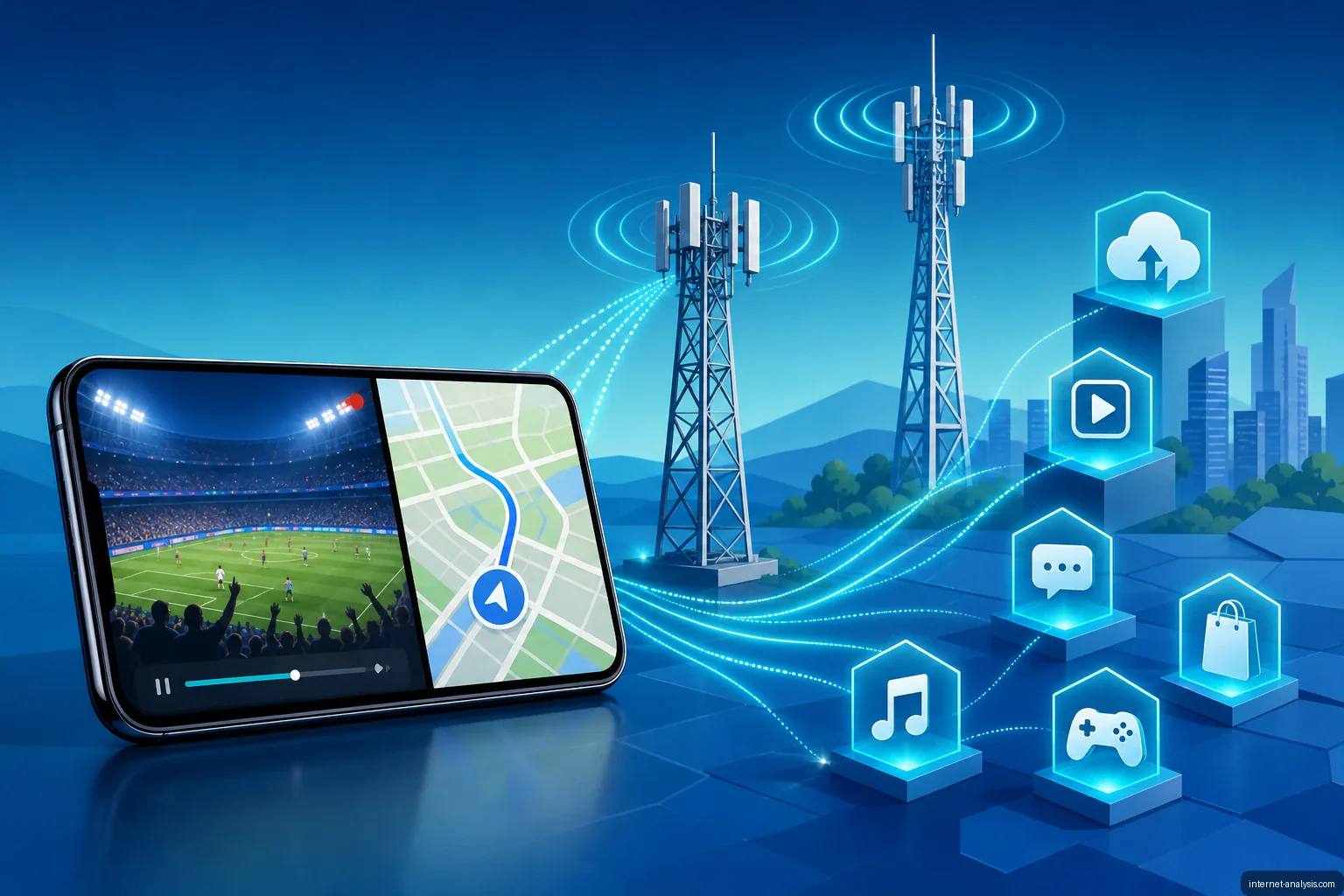
The success of mobile Internet changed the business priorities of cellular operators. As competition pushed voice-call prices downward, traditional phone subscriptions became less attractive as a source of growth. Operators increasingly turned to digital services and modern information technology to generate additional revenue.
Smartphones raised customer expectations
The expanding smartphone market accelerated this shift. Once subscribers became accustomed to mobile Internet access, many began expecting their phones to support a broader range of connected services.
Navigation was one early opportunity. Operators could offer services that helped users locate a vehicle by estimating the phone’s position in relation to cellular towers. This demonstrated how network capabilities could be packaged as products beyond basic calling and Internet access.
Faster networks made mobile television practical
Some operators went further by introducing television services for phones. Delivering live programming requires a sustained data connection, making network performance critical.
Mobile broadband technologies such as HSDPA and LTE can provide access at speeds of several megabits per second. That level of performance is sufficient to transmit live television, turning the smartphone into another screen for real-time programming.
From connectivity to services
Mobile television reflected a larger transition in telecommunications. Operators were no longer selling only voice minutes or basic connectivity; they were using faster networks to deliver services built around navigation, video and other smartphone capabilities. As mobile Internet matured, the network became a platform for products that extended well beyond the traditional phone subscription.

Tomasz
Founder & Network Data Analyst at Internet AnalysisTomasz leads data-focused analysis at Internet Analysis, covering internet speed, latency, reliability, broadband infrastructure, and ISP performance. His work connects measurable network indicators with clear explanations for everyday users.
View author profile →How this article was prepared
Reviews measurement definitions, compares like-for-like network samples, checks geographic and time coverage, and documents limitations before drawing conclusions.
Read our methodology →Reviewed by the Internet Analysis Editorial Team
Reviewed by the Internet Analysis Editorial Team · Updated September 14, 2026
Meet the editorial team →Article context, review and related questions
Falling voice-call prices and rising smartphone adoption encouraged mobile operators to build new services, including navigation and live television delivered over HSDPA and LTE networks.
| Measure | Value | Context |
|---|---|---|
| Article type | Telecommunications | Editorial classification |
| Reading time | 2 minutes | Estimated at approximately 220 words per minute |
| Editorial review | Internet Analysis Editorial Team | Updated September 14, 2026 |
| Review date | September 14, 2026 | Latest stored article update |
Methodology
Reviews measurement definitions, compares like-for-like network samples, checks geographic and time coverage, and documents limitations before drawing conclusions.
Full methodology →Data freshness
- Page updated
- Data period
- September 14, 2026
- Responsible editor
- TomaszFounder & Network Data Analyst
Primary sources
- Internet Analysis editorial methodologyReview and limitation rules
Limitations
- The article is informational and may simplify technical details for readability.
- Products, standards, prices and service availability can change after the review date.
- The latest review date does not guarantee that every external product or service remains unchanged.
Related questions
What is the main point of “How Mobile Internet Brought Live TV to Phones”?
Falling voice-call prices and rising smartphone adoption encouraged mobile operators to build new services, including navigation and live television delivered over HSDPA and LTE networks.
How was this article prepared?
Reviews measurement definitions, compares like-for-like network samples, checks geographic and time coverage, and documents limitations before drawing conclusions.
When was this information last reviewed?
The latest stored review or update date is September 14, 2026.