How to Create a Company Network
Learn how to plan, equip, configure, secure, and maintain a company network that supports communication, shared resources, connected devices, and future growth.
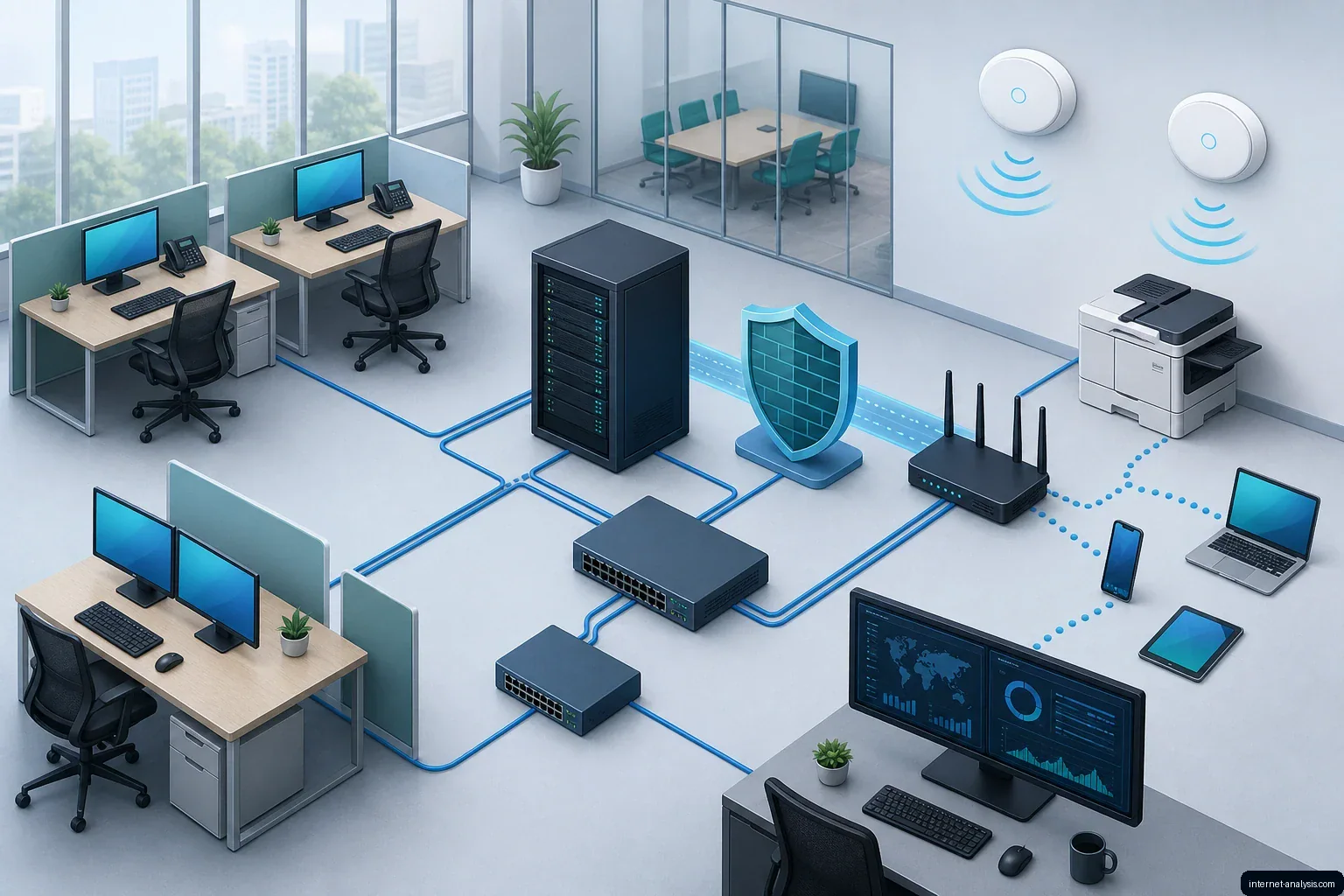
A reliable company network supports communication, data sharing, connected devices, and centralized resource management. Building one requires more than installing a router and connecting computers: the network must be designed around business needs, configured correctly, protected against threats, and maintained over time.
1. Analyze the company’s requirements
Begin by defining what the network must support. This assessment provides the basis for equipment selection, physical design, configuration, and security.
Consider the following questions:
- How many people will use the network?
- Which applications, files, and shared resources must be available?
- What computers, servers, printers, mobile devices, and other equipment will connect?
- Will employees need wired connections, wireless access, or both?
- How is the number of users and devices likely to change as the company grows?
Planning for expected expansion can reduce the need to redesign the network whenever the organization adds employees, equipment, or services.
2. Select suitable network equipment
Choose devices whose specifications match the company’s operational requirements. A typical business network may include:
- Routers to direct traffic between the internal network and other networks.
- Switches to connect wired computers, servers, printers, and other devices.
- Servers to provide centralized files, applications, or other shared resources.
- Wi-Fi access points to provide wireless connectivity in the required areas.
Capacity should reflect the number of users and devices, the resources they access, and anticipated growth. Equipment placement also matters, particularly for Wi-Fi coverage and access to wired connections.
3. Plan the network structure
Map the network before installing equipment. The plan should show where routers, switches, servers, access points, and connected devices will be located, along with the routes used for network cabling.
A practical design should account for:
- The physical layout of the workplace.
- The location of wired devices and cable runs.
- The placement of access points for suitable wireless coverage.
- Access to shared company resources.
- Space and capacity for future expansion.
Documenting the structure makes installation easier and provides a useful reference for troubleshooting, upgrades, and maintenance.
4. Configure the network
After the equipment is installed, configure each device according to the network plan. This includes assigning IP addresses, selecting and configuring the required network protocols, creating appropriate workgroups, and protecting access with secure passwords.
Configuration should be consistent across the environment. Keep a record of address assignments, device settings, workgroups, and access credentials so that authorized administrators can manage the network efficiently.
5. Protect company systems and data
Security must be included from the beginning rather than added after deployment. Appropriate safeguards help protect business data from unauthorized access, cyberattacks, and malicious software.
Core protections include:
- Firewalls to control network traffic.
- Antivirus systems to detect and address malware.
- Content filtering to restrict unwanted or unsafe material.
- Password protection for network access and administrative settings.
Security tools also require ongoing attention. Their software and protective measures should be updated regularly so they remain effective.
6. Monitor and maintain the network
Deployment is not the end of the project. Monitor the network’s operation and performance, investigate problems when they occur, and keep network devices and security systems updated.
Routine maintenance should include:
- Checking network availability and performance.
- Responding to connection, device, and resource-access problems.
- Updating network software and security measures.
- Reviewing whether the current design still meets business needs.
- Adjusting capacity as the company adds users, devices, or resources.
A planned approach creates a stronger network
A company network should be built as an ongoing business system, not a one-time equipment purchase. Careful requirements analysis, suitable hardware, a documented structure, correct configuration, effective security, and regular maintenance together create a network that can support daily operations and adapt as the organization grows.

Piotr
Network Performance Analyst at Internet AnalysisPiotr analyzes how download speed, upload speed, latency, jitter, and packet loss affect real-world connectivity. He translates test results into careful, reproducible explanations.
View author profile →How this article was prepared
Uses consistent metric definitions, excludes invalid samples where identifiable, compares medians rather than isolated extremes, and describes device, access-network, and geographic limitations.
Read our methodology →Reviewed by the Internet Analysis Editorial Team
Reviewed by the Internet Analysis Editorial Team · Updated August 19, 2026
Meet the editorial team →Article context, review and related questions
Learn how to plan, equip, configure, secure, and maintain a company network that supports communication, shared resources, connected devices, and future growth.
| Measure | Value | Context |
|---|---|---|
| Article type | Networking | Editorial classification |
| Reading time | 3 minutes | Estimated at approximately 220 words per minute |
| Editorial review | Internet Analysis Editorial Team | Updated August 19, 2026 |
| Review date | August 19, 2026 | Latest stored article update |
Methodology
Uses consistent metric definitions, excludes invalid samples where identifiable, compares medians rather than isolated extremes, and describes device, access-network, and geographic limitations.
Full methodology →Data freshness
- Page updated
- Data period
- August 19, 2026
- Responsible editor
- PiotrNetwork Performance Analyst
Primary sources
- Internet Analysis editorial methodologyReview and limitation rules
Limitations
- The article is informational and may simplify technical details for readability.
- Products, standards, prices and service availability can change after the review date.
- The latest review date does not guarantee that every external product or service remains unchanged.
Related questions
What is the main point of “How to Create a Company Network”?
Learn how to plan, equip, configure, secure, and maintain a company network that supports communication, shared resources, connected devices, and future growth.
How was this article prepared?
Uses consistent metric definitions, excludes invalid samples where identifiable, compares medians rather than isolated extremes, and describes device, access-network, and geographic limitations.
When was this information last reviewed?
The latest stored review or update date is August 19, 2026.