How Windows Became the Default PC Platform
Microsoft built a global software business by licensing operating systems and applications across the expanding PC market. Windows and Office became standards through broad hardware support, developer adoption and workplace compatibility.
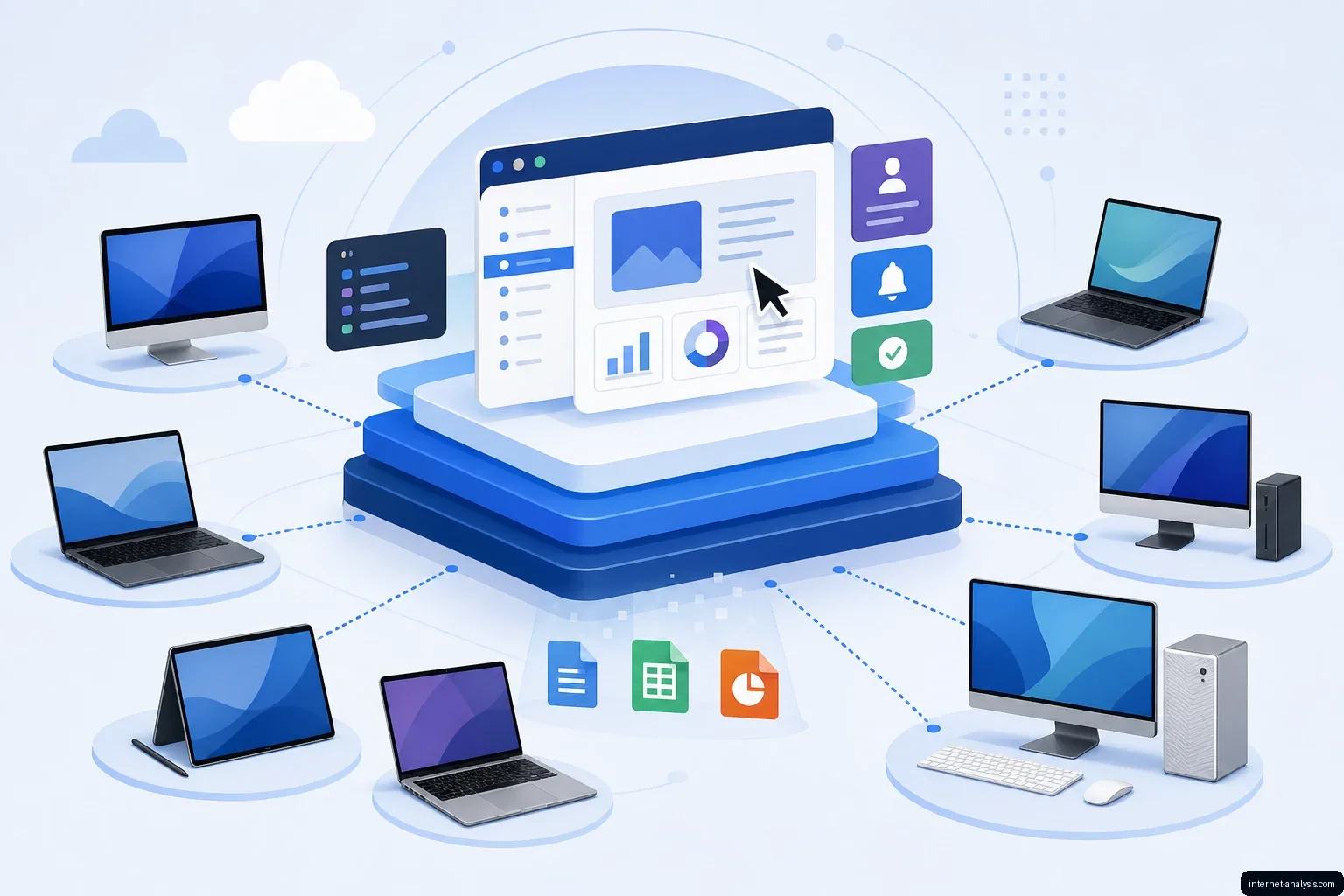
Microsoft’s rise helped establish software as one of the technology industry’s most valuable products. Rather than building its business primarily around manufacturing computers, the company licensed operating systems and applications that could run on machines made by other companies. That approach allowed Microsoft software to spread alongside the rapidly growing personal-computer market.
Bill Gates played a central role in that strategy as Microsoft’s co-founder and longtime leader. The company’s early success came from programming languages and later MS-DOS, the operating system supplied for the IBM PC and compatible computers. Because many manufacturers produced machines based on the same general platform, Microsoft could sell software across an expanding hardware ecosystem.
Windows brought a graphical interface to the mass PC market
Microsoft did not invent the operating system or the graphical user interface. Both existed before Windows, and early personal computers from several companies already offered visual environments controlled with keyboards and pointing devices. Microsoft’s achievement was to turn Windows into the dominant graphical platform for IBM-compatible PCs.
Earlier systems such as MS-DOS relied heavily on typed commands, although they could also run menu-driven and graphical programs. Windows gradually replaced that command-centered experience with a more approachable interface built around windows, icons, menus and a pointer. Successive releases made this environment familiar to households, schools and businesses.
The platform also benefited from a reinforcing cycle. A large user base encouraged developers to create Windows applications, while the wide selection of compatible software made Windows computers more attractive to buyers. Hardware manufacturers could offer machines at many prices without having to create their own operating systems.
Office strengthened Microsoft’s position
Microsoft Office became another important part of the company’s influence. Its major productivity applications—including Word, Excel and PowerPoint—were widely adopted for documents, spreadsheets and presentations. Common file formats and workplace practices encouraged organizations to standardize on the suite, making compatibility an important purchasing consideration.
Windows and Office have faced substantial competition, however. Apple’s macOS offers a mature desktop alternative, while Linux distributions such as Ubuntu provide free and open-source operating systems. Productivity options include open-source office suites and browser-based tools. Smartphones, tablets and cloud services have also reduced the desktop computer’s role in many everyday tasks.
Dominance is not the same as necessity
Microsoft’s products are deeply embedded in many organizations, but modern computers would not become useless without them. Other operating systems can support web browsing, communication, software development, media work and office tasks. Migrating away from Windows or Office can still be difficult when an organization depends on specialized applications, established file workflows, administrative tools or employee training.
Windows therefore remains significant not because it was the first operating system or the first graphical interface, but because Microsoft successfully combined broad hardware support, extensive developer participation, familiar design and widely used productivity software. That combination helped define mainstream personal computing for decades and demonstrated how a software platform could become the foundation of a global technology business.

Anna
Digital Safety & Consumer Research Editor at Internet AnalysisAnna edits practical guidance about safer internet use, privacy, online services, and consumer decisions. She prioritizes clear recommendations, scope, and transparent sourcing.
View author profile →How this article was prepared
Reviews claims against named primary or authoritative sources, removes unsupported certainty, distinguishes general education from professional advice, and records the article update date.
Read our methodology →Reviewed by the Internet Analysis Editorial Team
Reviewed by the Internet Analysis Editorial Team · Updated August 17, 2026
Meet the editorial team →Article context, review and related questions
Microsoft built a global software business by licensing operating systems and applications across the expanding PC market. Windows and Office became standards through broad hardware support, developer adoption and workplace compatibility.
| Measure | Value | Context |
|---|---|---|
| Article type | Software | Editorial classification |
| Reading time | 3 minutes | Estimated at approximately 220 words per minute |
| Editorial review | Internet Analysis Editorial Team | Updated August 17, 2026 |
| Review date | August 17, 2026 | Latest stored article update |
Methodology
Reviews claims against named primary or authoritative sources, removes unsupported certainty, distinguishes general education from professional advice, and records the article update date.
Full methodology →Data freshness
- Page updated
- Data period
- August 17, 2026
- Responsible editor
- AnnaDigital Safety & Consumer Research Editor
Primary sources
- Internet Analysis editorial methodologyReview and limitation rules
Limitations
- The article is informational and may simplify technical details for readability.
- Products, standards, prices and service availability can change after the review date.
- The latest review date does not guarantee that every external product or service remains unchanged.
Related questions
What is the main point of “How Windows Became the Default PC Platform”?
Microsoft built a global software business by licensing operating systems and applications across the expanding PC market. Windows and Office became standards through broad hardware support, developer adoption and workplace compatibility.
How was this article prepared?
Reviews claims against named primary or authoritative sources, removes unsupported certainty, distinguishes general education from professional advice, and records the article update date.
When was this information last reviewed?
The latest stored review or update date is August 17, 2026.