How the Internet Made Communication Global and Participatory
Internet access across computers, smartphones and tablets has transformed passive media audiences into participants in global conversations and coalitions.
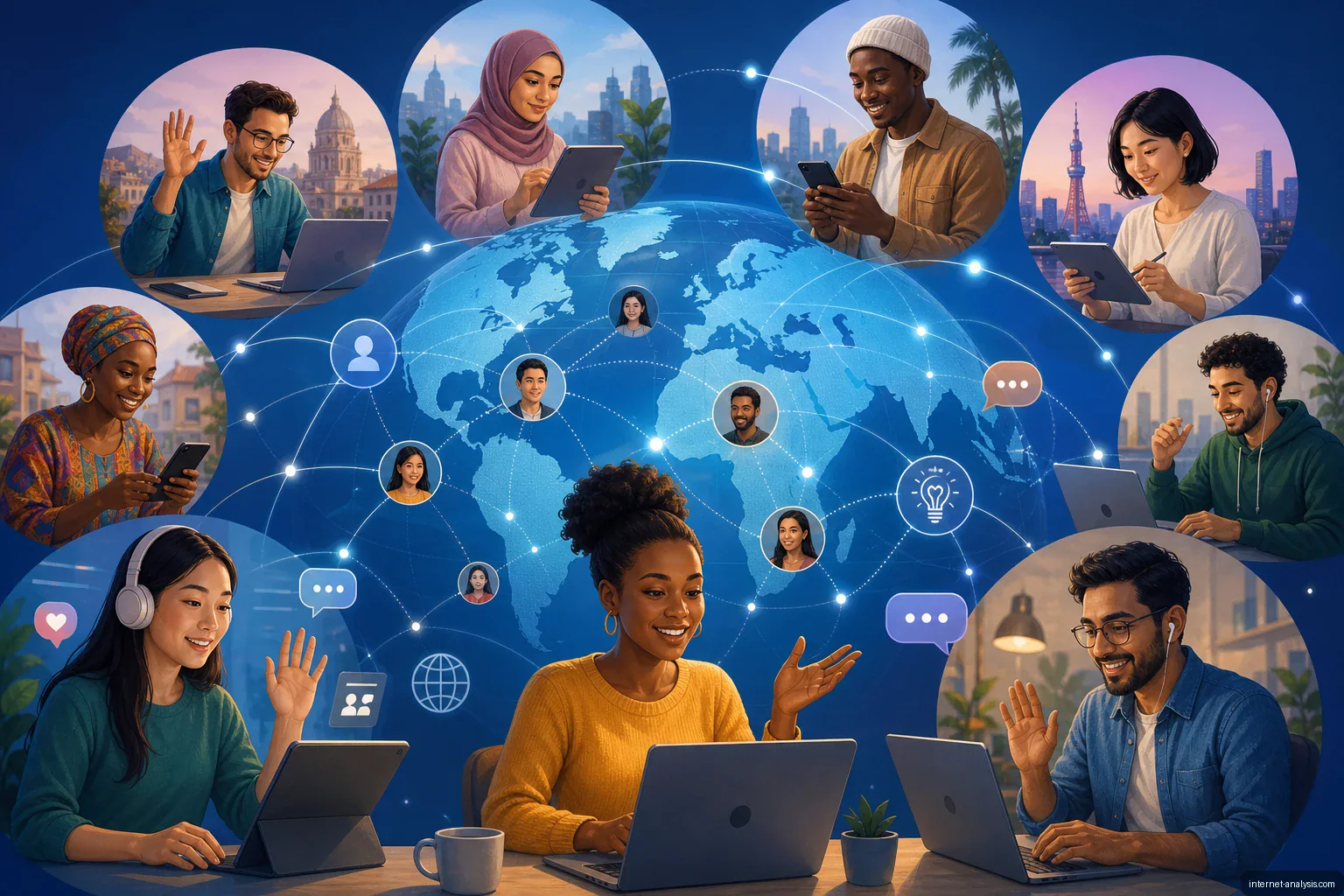
The Internet has become so deeply embedded in social and cultural life that its significance can be easy to overlook. It does more than deliver information: it allows people to respond, organize and participate in conversations that can cross national borders almost instantly.
From passive audiences to active participants
Before online communication became commonplace, most media operated in one direction. Audiences watched television, listened to radio or read printed publications, but generally had little influence over the material presented to them. They could remember, discuss or ignore it, yet they rarely had an immediate way to answer publicly or contribute to the same channel.
Internet platforms changed that relationship. A person can now react to news, criticize an idea, promote an event or join a public discussion in the same digital environment where the information appears. Communication is no longer reserved for media organizations and other large institutions; individuals can participate directly.
Access beyond the desktop
Advances in information technology have also expanded how people connect. Internet access is no longer limited to desktop and laptop computers. Smartphones and modern tablets make news, technology publications and social platforms available from almost anywhere a network connection is present.
This broader access allows large numbers of people to gather on the same service at the same time. On a major social network such as Facebook, an individual user shares the platform with millions of others, creating the conditions for discussions to spread rapidly across communities and regions.
Building coalitions without traditional media
When many users debate, criticize or promote the same event, cause or way of life, separate reactions can develop into a coordinated public movement. Social networks give participants the tools to circulate information and reinforce one another’s messages without relying entirely on television, radio or newspapers.
The result is a form of global communication defined by participation as much as access. Connected devices provide the technical route, while online communities supply the scale. Together, they enable people to form coalitions, influence public conversations and share ideas beyond the traditional boundaries of mass media.

Krzysztof
Broadband Infrastructure Editor at Internet AnalysisKrzysztof covers broadband technologies, provider availability, and infrastructure change. He focuses on making technical coverage data understandable without overstating what provider-reported availability proves.
View author profile →How this article was prepared
Cross-checks provider, technology, geography, and reporting-vintage fields; separates advertised availability from measured performance; and flags incomplete coverage denominators.
Read our methodology →Reviewed by the Internet Analysis Editorial Team
Reviewed by the Internet Analysis Editorial Team · Updated September 14, 2026
Meet the editorial team →Article context, review and related questions
Internet access across computers, smartphones and tablets has transformed passive media audiences into participants in global conversations and coalitions.
| Measure | Value | Context |
|---|---|---|
| Article type | Telecommunications | Editorial classification |
| Reading time | 2 minutes | Estimated at approximately 220 words per minute |
| Editorial review | Internet Analysis Editorial Team | Updated September 14, 2026 |
| Review date | September 14, 2026 | Latest stored article update |
Methodology
Cross-checks provider, technology, geography, and reporting-vintage fields; separates advertised availability from measured performance; and flags incomplete coverage denominators.
Full methodology →Data freshness
- Page updated
- Data period
- September 14, 2026
- Responsible editor
- KrzysztofBroadband Infrastructure Editor
Primary sources
- Internet Analysis editorial methodologyReview and limitation rules
Limitations
- The article is informational and may simplify technical details for readability.
- Products, standards, prices and service availability can change after the review date.
- The latest review date does not guarantee that every external product or service remains unchanged.
Related questions
What is the main point of “How the Internet Made Communication Global and Participatory”?
Internet access across computers, smartphones and tablets has transformed passive media audiences into participants in global conversations and coalitions.
How was this article prepared?
Cross-checks provider, technology, geography, and reporting-vintage fields; separates advertised availability from measured performance; and flags incomplete coverage denominators.
When was this information last reviewed?
The latest stored review or update date is September 14, 2026.