How the Internet Transformed Mass Communication
The internet transformed newspapers, radio and television from largely one-way channels into interactive spaces where audiences can respond and debate.
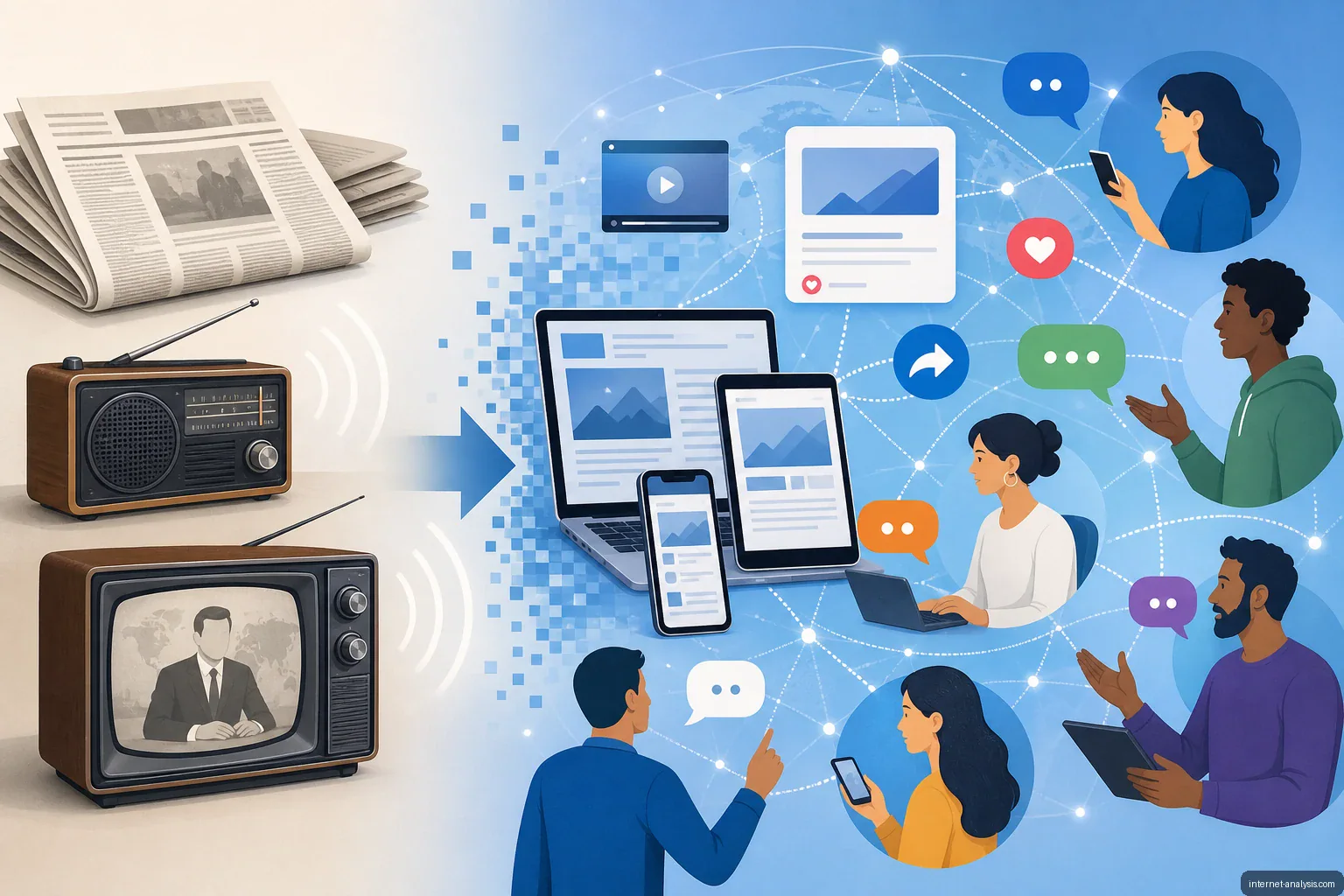
Mass communication now involves more simultaneous participation than at any earlier point in the history of media. What was once a largely one-way system has become an ongoing exchange in which audiences can respond publicly and immediately.
The era of one-way media
For much of the modern media age, newspapers, radio and television controlled the flow of information. Editors and broadcasters selected material, distributed it through their respective channels and delivered it to audiences whose role was primarily to receive it.
Opportunities for feedback were limited. A reader, listener or viewer might write a letter to an editor, but there was little assurance that the response would be acknowledged, published or discussed on the air. The technologies themselves reinforced this imbalance: a relatively small number of organizations transmitted information to large groups of people.
Computers and the internet changed the model
The spread of personal computers and the growth of the internet introduced a fundamentally different form of communication. Traditional print and broadcast organizations began publishing their material online, placing newspaper articles, radio segments and television content within an interactive environment.
Once media moved online, recipients were no longer confined to passive consumption. Comment sections and other public response mechanisms allowed almost anyone to add an observation, challenge a claim or address other participants beneath the original material.
From broadcasting to public debate
This shift blurred the boundary between sender and recipient. A person encountering a report can become an active participant, even without having been interested in the initial message. One comment may prompt replies, counterarguments and extended discussions involving many users.
The result is a model of mass communication defined not only by the size of its audience, but also by the number of people able to take part. Newspapers, radio and television still distribute information, yet their online presence places that information inside a broader public conversation—one that can quickly develop into a heated contest of arguments.

Krzysztof
Broadband Infrastructure Editor at Internet AnalysisKrzysztof covers broadband technologies, provider availability, and infrastructure change. He focuses on making technical coverage data understandable without overstating what provider-reported availability proves.
View author profile →How this article was prepared
Cross-checks provider, technology, geography, and reporting-vintage fields; separates advertised availability from measured performance; and flags incomplete coverage denominators.
Read our methodology →Reviewed by the Internet Analysis Editorial Team
Reviewed by the Internet Analysis Editorial Team · Updated September 14, 2026
Meet the editorial team →Article context, review and related questions
The internet transformed newspapers, radio and television from largely one-way channels into interactive spaces where audiences can respond and debate.
| Measure | Value | Context |
|---|---|---|
| Article type | Telecommunications | Editorial classification |
| Reading time | 2 minutes | Estimated at approximately 220 words per minute |
| Editorial review | Internet Analysis Editorial Team | Updated September 14, 2026 |
| Review date | September 14, 2026 | Latest stored article update |
Methodology
Cross-checks provider, technology, geography, and reporting-vintage fields; separates advertised availability from measured performance; and flags incomplete coverage denominators.
Full methodology →Data freshness
- Page updated
- Data period
- September 14, 2026
- Responsible editor
- KrzysztofBroadband Infrastructure Editor
Primary sources
- Internet Analysis editorial methodologyReview and limitation rules
Limitations
- The article is informational and may simplify technical details for readability.
- Products, standards, prices and service availability can change after the review date.
- The latest review date does not guarantee that every external product or service remains unchanged.
Related questions
What is the main point of “How the Internet Transformed Mass Communication”?
The internet transformed newspapers, radio and television from largely one-way channels into interactive spaces where audiences can respond and debate.
How was this article prepared?
Cross-checks provider, technology, geography, and reporting-vintage fields; separates advertised availability from measured performance; and flags incomplete coverage denominators.
When was this information last reviewed?
The latest stored review or update date is September 14, 2026.