How Mobile Data Transformed Phones Into Smartphones
EDGE and HSDPA brought faster mobile data, but smartphones and touchscreen interfaces were needed to make browsing and online communication practical on handheld devices.
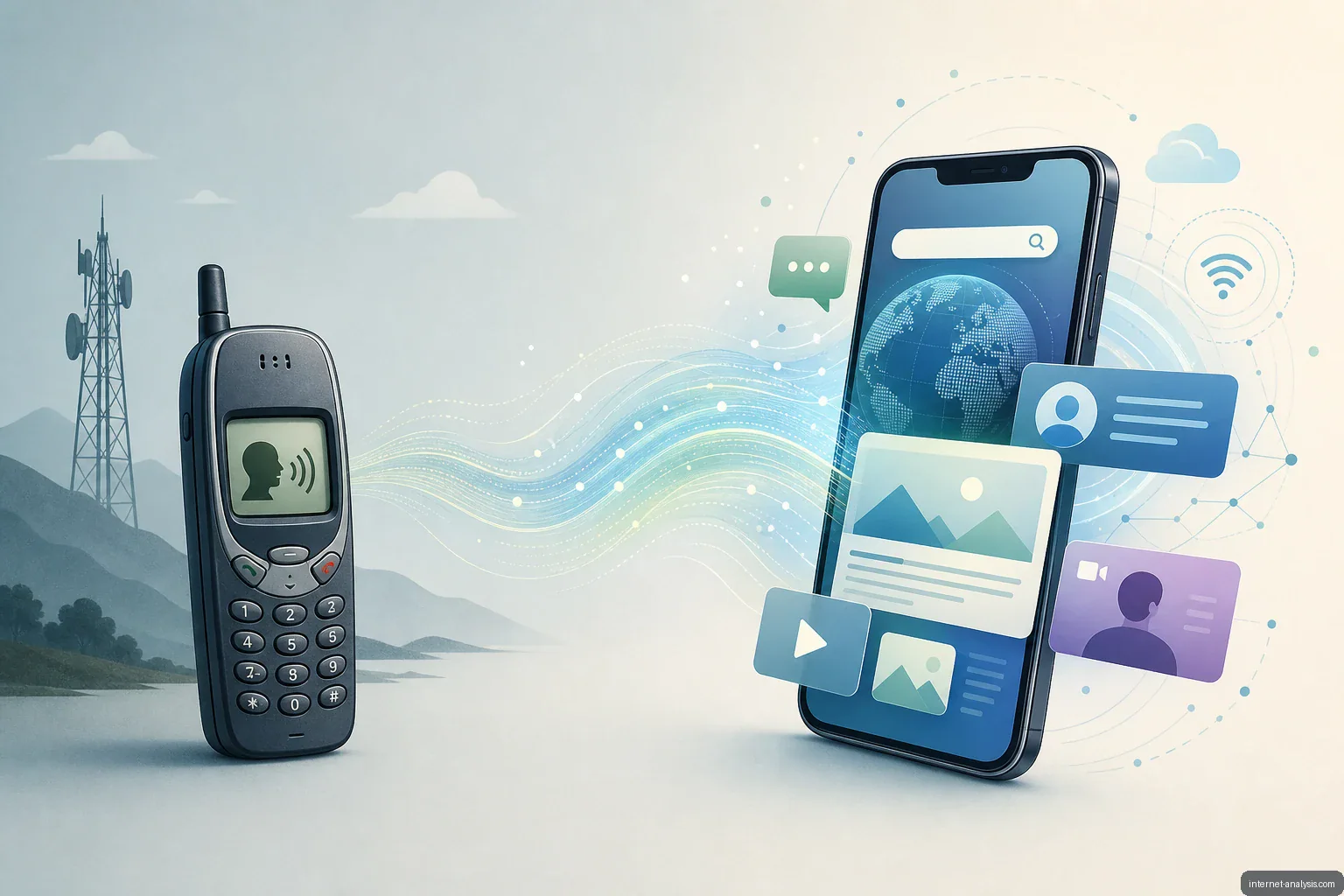
Mobile phones changed fundamentally when they evolved from voice-focused communication devices into practical tools for accessing the internet. GSM networks had already made mobile calling widely useful, but packet-based data technologies such as EDGE and HSDPA introduced a broader range of possibilities. Phones could increasingly support web browsing, online conversations and other connected activities while users were away from a computer.
From GSM Communication to Mobile Data
In the earlier GSM era, the mobile phone’s primary role centered on communication. The arrival of EDGE and later HSDPA helped move mobile telephony into a more data-oriented phase by enabling faster internet access over cellular networks.
This transition was not simply a network upgrade. Once phones could receive online data at more useful speeds, their hardware and interfaces also had to change. Devices designed mainly for calls and short text messages were not necessarily well suited to websites or live online chats.
Why Early Mobile Internet Was Awkward
Early users could access high-speed mobile internet, but the experience was constrained by device design. Small displays made webpages difficult to view, while physical keypads and compact keyboards made longer interactions cumbersome.
These limitations became more noticeable as mobile data capabilities improved. Faster connections had limited practical value if entering text, navigating pages and reading content remained uncomfortable. Manufacturers therefore needed to rethink how people interacted with their phones.
The Rise of Smartphones and Touchscreens
Smartphones emerged as a response to the growing importance of mobile data. Touchscreen models represented a particularly significant step because they reduced dependence on fixed physical keyboards.
A virtual keyboard could appear when needed and disappear when the user returned to browsing or another task. This allowed the same screen area to serve several purposes, making internet use more convenient without requiring a permanent set of keys below the display.
Networks and Interfaces Evolved Together
The development of modern mobile computing depended on both faster data transmission and more usable devices. EDGE and HSDPA expanded what cellular networks could deliver, while smartphones and touchscreen interfaces made those capabilities easier to use.
Together, these changes reshaped the phone from a device built primarily for calls into a versatile platform for internet access and real-time digital communication.

Krzysztof
Broadband Infrastructure Editor at Internet AnalysisKrzysztof covers broadband technologies, provider availability, and infrastructure change. He focuses on making technical coverage data understandable without overstating what provider-reported availability proves.
View author profile →How this article was prepared
Cross-checks provider, technology, geography, and reporting-vintage fields; separates advertised availability from measured performance; and flags incomplete coverage denominators.
Read our methodology →Reviewed by the Internet Analysis Editorial Team
Reviewed by the Internet Analysis Editorial Team · Updated September 14, 2026
Meet the editorial team →Article context, review and related questions
EDGE and HSDPA brought faster mobile data, but smartphones and touchscreen interfaces were needed to make browsing and online communication practical on handheld devices.
| Measure | Value | Context |
|---|---|---|
| Article type | Telecommunications | Editorial classification |
| Reading time | 2 minutes | Estimated at approximately 220 words per minute |
| Editorial review | Internet Analysis Editorial Team | Updated September 14, 2026 |
| Review date | September 14, 2026 | Latest stored article update |
Methodology
Cross-checks provider, technology, geography, and reporting-vintage fields; separates advertised availability from measured performance; and flags incomplete coverage denominators.
Full methodology →Data freshness
- Page updated
- Data period
- September 14, 2026
- Responsible editor
- KrzysztofBroadband Infrastructure Editor
Primary sources
- Internet Analysis editorial methodologyReview and limitation rules
Limitations
- The article is informational and may simplify technical details for readability.
- Products, standards, prices and service availability can change after the review date.
- The latest review date does not guarantee that every external product or service remains unchanged.
Related questions
What is the main point of “How Mobile Data Transformed Phones Into Smartphones”?
EDGE and HSDPA brought faster mobile data, but smartphones and touchscreen interfaces were needed to make browsing and online communication practical on handheld devices.
How was this article prepared?
Cross-checks provider, technology, geography, and reporting-vintage fields; separates advertised availability from measured performance; and flags incomplete coverage denominators.
When was this information last reviewed?
The latest stored review or update date is September 14, 2026.