Servers Keep Getting Bigger—But Not in Physical Size
Early servers could fill several rooms while providing little storage. Modern systems are far smaller, with capacity and file-delivery speed now taking priority over physical scale.
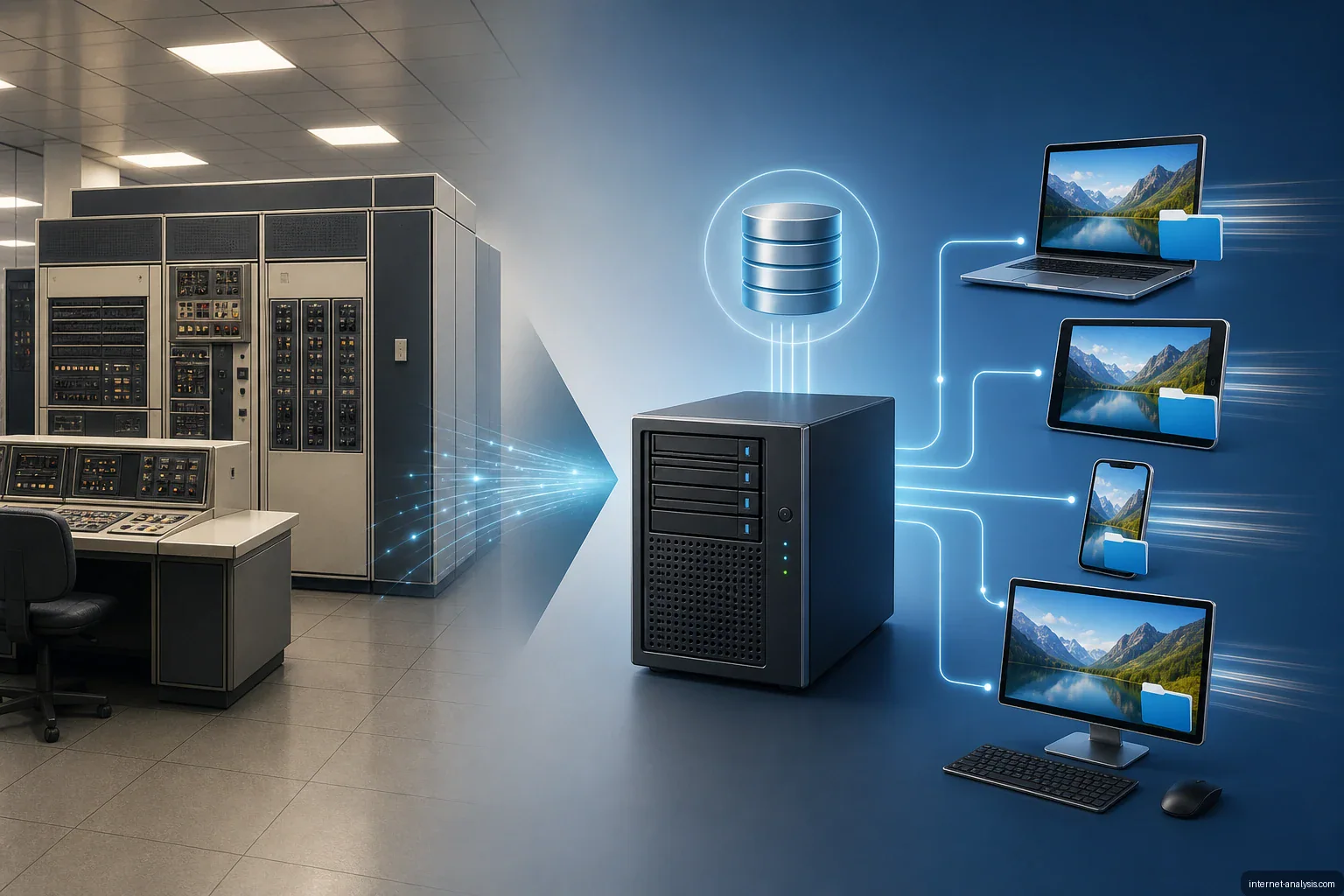
The earliest servers were enormous, complex machines that offered remarkably little storage by modern standards. Some installations occupied several rooms, putting them far beyond the reach of most organizations.
Today, a server suitable for a household or small business can fit inside a case comparable to that of a conventional desktop computer. Despite this dramatic reduction in physical size, modern systems can store far more information and deliver files much faster than their predecessors.
Why early servers were limited to major institutions
The cost, complexity and space requirements of early computing systems restricted network research to organizations with substantial resources. Wealthy companies, including airlines, were among the businesses capable of investing in the technology.
Government institutions and organizations dedicated to technological advancement also played an important role. This group included the world’s first technical universities, which invested in early servers and helped advance research into network communications.
Storage and networking drove their value
Although early servers had limited capacity, they served two essential purposes. First, they provided a centralized location for critical information instead of leaving it solely on an individual computer. Second, they supported research and development in communications between connected machines.
These functions established the server’s enduring role: holding resources centrally and making them available to authorized users across a network.
Modern priorities: capacity and delivery speed
Physical scale is no longer the defining characteristic of a server. For many current systems, the more important considerations are how much data they can store and how quickly they can deliver files to logged-in users.
- Storage capacity: The amount of information the server can retain.
- Delivery speed: How quickly the system can provide requested files to connected users.
- Centralized access: The ability to keep important resources in one managed location and make them available over a network.
In these respects, present-day technology bears little resemblance to the room-sized systems of earlier decades. Servers have become smaller and more accessible while their practical capabilities have expanded significantly.

Piotr
Network Performance Analyst at Internet AnalysisPiotr analyzes how download speed, upload speed, latency, jitter, and packet loss affect real-world connectivity. He translates test results into careful, reproducible explanations.
View author profile →How this article was prepared
Uses consistent metric definitions, excludes invalid samples where identifiable, compares medians rather than isolated extremes, and describes device, access-network, and geographic limitations.
Read our methodology →Reviewed by the Internet Analysis Editorial Team
Reviewed by the Internet Analysis Editorial Team · Updated August 28, 2026
Meet the editorial team →Article context, review and related questions
Early servers could fill several rooms while providing little storage. Modern systems are far smaller, with capacity and file-delivery speed now taking priority over physical scale.
| Measure | Value | Context |
|---|---|---|
| Article type | Computer Science | Editorial classification |
| Reading time | 2 minutes | Estimated at approximately 220 words per minute |
| Editorial review | Internet Analysis Editorial Team | Updated August 28, 2026 |
| Review date | August 28, 2026 | Latest stored article update |
Methodology
Uses consistent metric definitions, excludes invalid samples where identifiable, compares medians rather than isolated extremes, and describes device, access-network, and geographic limitations.
Full methodology →Data freshness
- Page updated
- Data period
- August 28, 2026
- Responsible editor
- PiotrNetwork Performance Analyst
Primary sources
- Internet Analysis editorial methodologyReview and limitation rules
Limitations
- The article is informational and may simplify technical details for readability.
- Products, standards, prices and service availability can change after the review date.
- The latest review date does not guarantee that every external product or service remains unchanged.
Related questions
What is the main point of “Servers Keep Getting Bigger—But Not in Physical Size”?
Early servers could fill several rooms while providing little storage. Modern systems are far smaller, with capacity and file-delivery speed now taking priority over physical scale.
How was this article prepared?
Uses consistent metric definitions, excludes invalid samples where identifiable, compares medians rather than isolated extremes, and describes device, access-network, and geographic limitations.
When was this information last reviewed?
The latest stored review or update date is August 28, 2026.