Virtual Entertainment: From Computer Games to Social Media
Computers evolved from practical work tools into gateways for games, online video, chat rooms and social networks, reshaping entertainment and workplace habits.
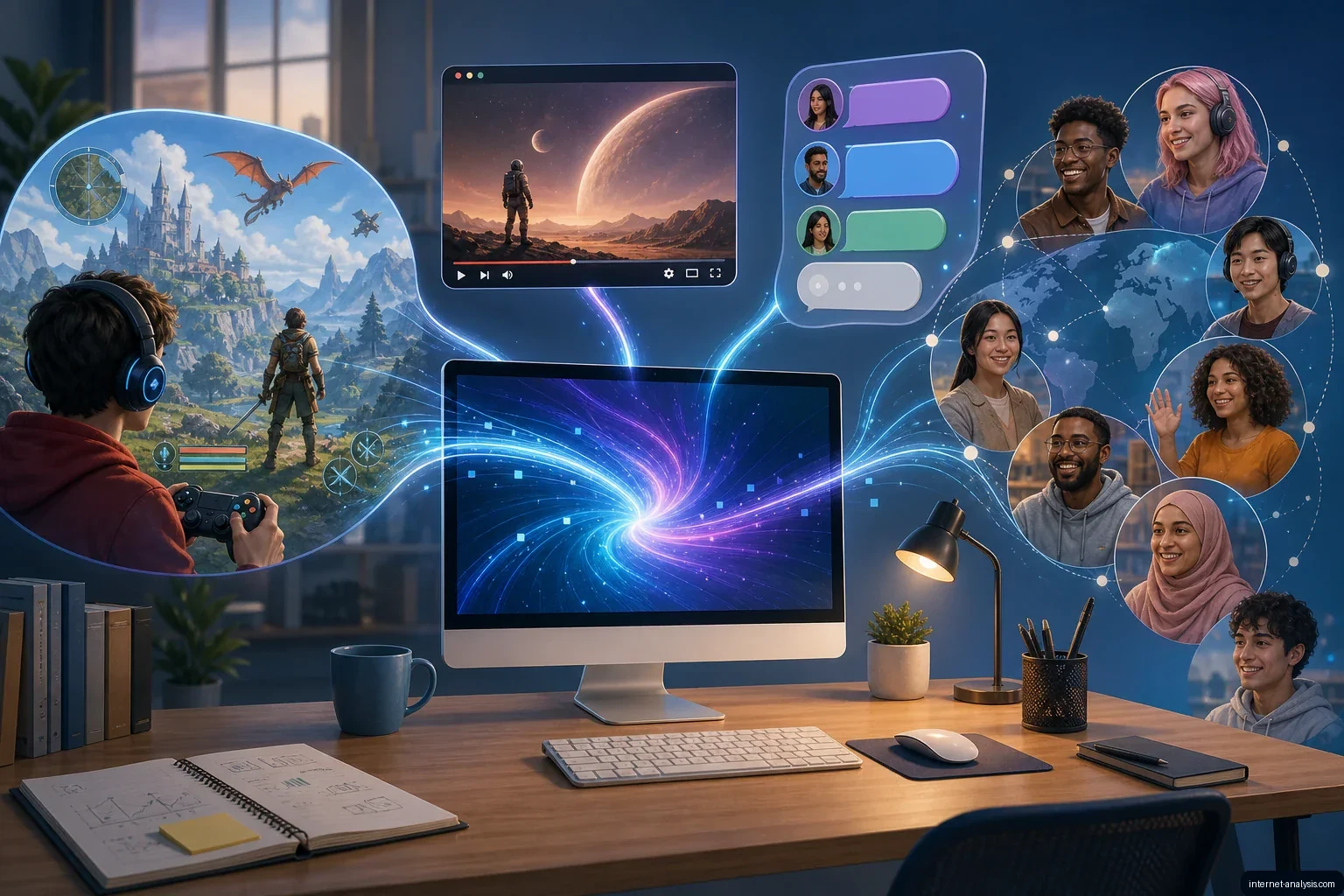
Computers are essential work tools for millions of people, but productivity is only one part of their role. They also became entertainment machines, giving users access to digital games and, later, an expanding range of online activities.
The rise of computer gaming
Game developers spent years building increasingly sophisticated virtual worlds. Competition encouraged technical and creative specialization, while recognizable gaming genres emerged in much the same way that distinct categories developed in music.
The gaming market has since become relatively stable and clearly segmented. Rather than trying to serve every kind of player, many developers now concentrate on particular genres or narrowly defined areas of expertise.
The internet as an entertainment platform
The internet was adopted for recreation almost from its beginning. It broadened virtual entertainment beyond standalone games by connecting people to multiplayer experiences, chat rooms, video platforms and online communities.
Prominent forms of internet entertainment include:
- Computer and online games
- Chat rooms and other real-time communication spaces
- Video platforms such as YouTube
- Social media networks
When entertainment competes with work
Online entertainment is readily available on the same computers people use for their jobs. That overlap can create workplace distractions, particularly when employees spend substantial amounts of time watching online videos instead of completing their duties. After identifying this behavior, many employers introduced employee monitoring to better understand how workplace systems were being used.
A more connected social world
Social media added another dimension to virtual entertainment by combining communication, content and community participation. These platforms allow people in different parts of the world to interact in shared digital spaces, reinforcing the idea of the internet as a global village.
Virtual entertainment now extends well beyond gaming. It encompasses video, conversation and social interaction, making recreation a central part of everyday computer and internet use.

Tomasz
Founder & Network Data Analyst at Internet AnalysisTomasz leads data-focused analysis at Internet Analysis, covering internet speed, latency, reliability, broadband infrastructure, and ISP performance. His work connects measurable network indicators with clear explanations for everyday users.
View author profile →How this article was prepared
Reviews measurement definitions, compares like-for-like network samples, checks geographic and time coverage, and documents limitations before drawing conclusions.
Read our methodology →Reviewed by the Internet Analysis Editorial Team
Reviewed by the Internet Analysis Editorial Team · Updated August 18, 2026
Meet the editorial team →Article context, review and related questions
Computers evolved from practical work tools into gateways for games, online video, chat rooms and social networks, reshaping entertainment and workplace habits.
| Measure | Value | Context |
|---|---|---|
| Article type | Computing | Editorial classification |
| Reading time | 2 minutes | Estimated at approximately 220 words per minute |
| Editorial review | Internet Analysis Editorial Team | Updated August 18, 2026 |
| Review date | August 18, 2026 | Latest stored article update |
Methodology
Reviews measurement definitions, compares like-for-like network samples, checks geographic and time coverage, and documents limitations before drawing conclusions.
Full methodology →Data freshness
- Page updated
- Data period
- August 18, 2026
- Responsible editor
- TomaszFounder & Network Data Analyst
Primary sources
- Internet Analysis editorial methodologyReview and limitation rules
Limitations
- The article is informational and may simplify technical details for readability.
- Products, standards, prices and service availability can change after the review date.
- The latest review date does not guarantee that every external product or service remains unchanged.
Related questions
What is the main point of “Virtual Entertainment: From Computer Games to Social Media”?
Computers evolved from practical work tools into gateways for games, online video, chat rooms and social networks, reshaping entertainment and workplace habits.
How was this article prepared?
Reviews measurement definitions, compares like-for-like network samples, checks geographic and time coverage, and documents limitations before drawing conclusions.
When was this information last reviewed?
The latest stored review or update date is August 18, 2026.